
Non-Toxic Living Is One of the Most Powerful Paths to a Longer, Healthier Life (and It Starts in Your Kitchen!)
Non-Toxic Living Starts in the Kitchen and It Could Change Everything
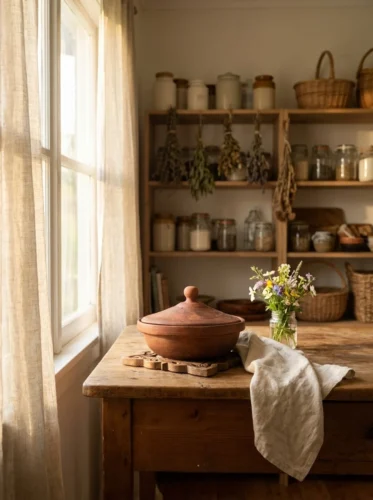 Over 70% of U.S. adults are concerned about their exposure to harmful chemicals. They’re reading labels, switching out cleaning products, and reconsidering what they put on their skin. And yet one of the most consistent sources of daily toxic exposure often goes completely unnoticed: whats happening in your kitchen.
The place where we gather to nourish ourselves and our families is also, for many people, a daily point of contact with substances that quietly work against long-term health. Not dramatically. Not all at once. But steadily, over years of repeated use.
Non-toxic living isn’t about extremes or perfection. It’s about reducing unnecessary toxic stress on the body through everyday choices, and among those choices, what we cook with plays a far more important role than what people realize.
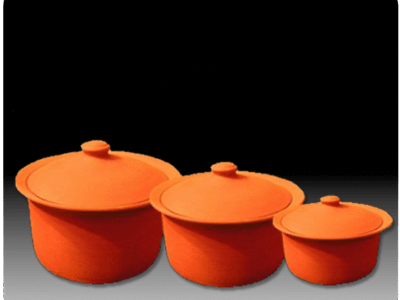
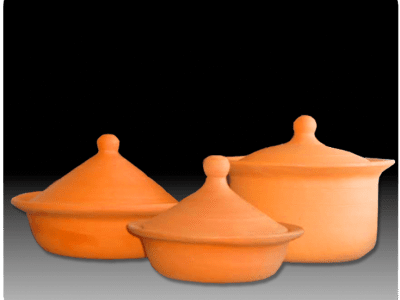
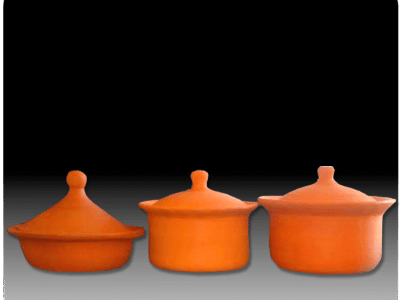
At Miriam’s Earthen Cookware, non-toxic living is not a trend or a marketing angle. It is the entire reason the company exists. Every piece of Miriam’s cookware is handcrafted from a single ingredient: 100% primary clay. No coatings, no additives, no compromises.
The Hidden Impact of Everyday Toxins on Human Health
How chronic toxin exposure affects cellular health
The human body is remarkably resilient. It filters, neutralizes, and eliminates a wide range of substances every single day. But that resilience has limits, and modern life has a way of testing it.
Chronic low-level toxin exposure works differently than acute poisoning. There is no dramatic reaction, no obvious moment of harm. Instead, the burden accumulates gradually at the cellular level, where the body’s most fundamental processes happen. Cells depend on clean internal environments to produce energy, replicate accurately, communicate with neighboring cells, and repair damage. When foreign substances constantly interfere with those processes, even at low concentrations, the long-term effects on health and vitality can be significant.
Research increasingly links chronic toxin exposure to inflammation, hormonal disruption, and accelerated cellular aging, all of which have downstream effects on how we feel, how well our bodies function, and ultimately how long we live well.
How cellular health is fundamental to the sustenance of life in the body and its longevity
Longevity is not simply a matter of avoiding serious illness. It is the result of countless small biological processes functioning properly over decades. Cellular health is the foundation beneath all of it.
When cells are supported by clean nutrition, low toxic stress, and stable internal environments, they are better equipped to carry out their roles. When they are repeatedly exposed to substances that disrupt normal function, the cumulative effect becomes harder to ignore over time. Supporting cellular health is not a specialized medical intervention. It begins with the ordinary choices made every day, and a few have an impact that is as great as this: toxins entering through the cookware preparing three meals everyday that nourish every cell of the body!
Why modern living increases toxic load over time
For most of human history, the materials people cooked with were simple: clay, glass, stone and wood. The industrial era introduced an entirely new category of materials into the kitchen, many of which were developed for convenience and durability rather than biological compatibility.
Today, the average kitchen contains cookware made from aluminum, stainless steel alloys, and polymers coated with synthetic compounds. Many of these materials are falsly considered “safe” within a narrow set of parameters. But parameters have a way of shifting under heat, wear, and repeated use. The result, for many people, is a slow and invisible increase in toxic load over time, simply from cooking meals at home.
It is precisely this gap between modern convenience and biological compatibility that Miriam’s Earthen Cookware was built to address. Pure clay has been used as a cooking material for thousands of years, long before synthetic coatings existed, and Miriam’s brings that same material into the modern kitchen without modification.

Why the Kitchen Is the Most Critical Place to Begin Non-Toxic Living
Daily cooking as a primary source of toxin exposure
Most people think about toxin exposure in terms of air quality, water quality, or pesticides in food. These are legitimate concerns. But cookware rarely makes the list, despite the fact that it is used every single day, often multiple times, and always in combination with heat.
Heat changes things. It is a catalyst to chemical reactions, it breaks down materials at the celular level, and can cause compounds that are stable at room temperature to migrate into food. Every time a coated pan is heated, every time a surface comes into contact with ingredients, every time synthetic materials are pushed past their “safe” temperature range, there is an opportunity for unwanted substances to end up in the meal.
This is not a reason for alarm. It is a reason for awareness.
This is why MEC customers often describe switching to pure clay cookware as one of the most impactful changes they have made in their kitchens. Not because it is dramatic, but because it addresses something that happens multiple times every single day!
“There is so much difference in the way I feel. My doctor cannot believe there is so much improvement in the way my body is functioning, my muscles are much stronger and more receptive to exercises and flexing, all my joint pain is gone… my energy levels are clearly higher. I am used to eating the same healthy food; the only difference is now I cook it in Miriam’s clay pots….” -Roshini Vijay – BELTON, SC
“.…What I love most about Miriams Earthen Cookware is that is it completely natural and unprocessed, making it the healthiest cookware available! And that is so unique and rare to find nowadays in our high-tech world! I have felt more energized using these products, and have better tasting food. Thank you so much MEC for returning us to our roots!” -Cheryl, California, USA
“…It puts my whole mind and body at ease knowing that the food I’m eating has been prepared in 100% safe, non-toxic material. I highly recommend this cookware…” -Marcella Cytrynowicz, USA
How cookware materials influence what ends up in your food
Not all cookware behaves the same way under heat. Some materials are highly reactive; others are stable. Some degrade visibly over time; others degrade in ways you cannot see. The difference matters because cookware is not a passive vessel. It interacts with food throughout the cooking process.
Many people assume that only acidic ingredients like tomatoes, citrus, and vinegar draw material out of reactive cookware surfaces, but the reality is broader than that. Both acidic and alkaline foods can interact with metals and oxides in the cookware materials, and heat amplifies this regardless of what is in the pan. Mechanical abrasion from metal utensils or abrasive cleaning removes protective layers further, creating more surface area for food to interact with. Each of these factors, individually minor, adds up over time.
Choosing cookware made from materials that are chemically stable, heat-tolerant, and free from synthetic coatings is one of the most direct ways to reduce kitchen-based toxin exposure. Miriam’s Earthen Cookware provides you just that.
Understanding Non-Toxic Cookware and Why It Matters
What defines truly non-toxic cookware
The term “non-toxic” gets used loosely in the cookware market. For many brands, it simply means free from one specific compound, usually PTFE or PFOA, while the replacement coatings or base materials remain undisclosed or inadequately tested.
Truly non-toxic cookware goes further. It means the material is inherently stable, not just the coating on top of it. It means the cookware can withstand normal cooking temperatures without breaking down. It means there are no hidden glazes, binders, or additives that behave differently under sustained heat. And it means the manufacturer is willing to be fully transparent about what the cookware is made of, because there is nothing to hide.
Pure clay cookware, like Miriam’s Earthen Cookware, meets this standard. Made from 100% primary clay sourced in the USA, with no glazes, coatings, additives, or heavy metals, what you see is what you get: unaltered earth, shaped into cookware, tested and certified free of lead and cadmium.
Common cookware materials and their hidden risks
Non-stick coatings remain the most widely discussed concern, and for good reason. Traditional PTFE-based coatings begin to degrade at temperatures that are easy to reach in a home kitchen, releasing compounds that have been linked to a range of health concerns. Many manufacturers have moved away from PTFE, but replacement coatings, often marketed as “ceramic” or “green,” are not as clean as they appear and have little to no long-term safety data.
Aluminum cookware, even anodized, can leach into food under acidic or high-heat conditions. Stainless steel which is an alloy of different metals like nickel, chromium, iron, molybadium, is also not inert. Enameled cast iron is more stable than raw cast iron but typically involves synthetic enamels that add their own variables.
The pattern across all of these materials is the same: modern convenience, imperfect transparency, and unknown long-term risk. The alternative is simpler materials with longer track records.
Frequently Asked Questions About Non-Toxic Living and Cookware
Can cookware really affect long-term health?
Yes. Cooking is a daily activity, and repeated exposure, however small, accumulates over time. Because cookware is used consistently, the materials it is made from play a role in long-term exposure patterns. Choosing stable, non-toxic materials helps minimize unnecessary toxic stress on the body.
Why does non-toxic living start in the kitchen?
The kitchen is where food is handled, heated, and consumed every day. Since heat can intensify the transfer of compounds from cookware into food, the kitchen becomes a primary place where healthier choices can make a meaningful difference in daily exposure levels.
Is non-toxic cookware only about avoiding non-stick surfaces?
No. While avoiding certain chemical coatings is important, non-toxic cookware also involves metal cookware because all metals are reactive and leach into food and generate heat that is destructive to foods nutritive cells. And ceramic cookware – the ceramic material is a concoction with various oxides, metals and toxic oils.
What makes Miriam’s Earthen Cookware different from other non-toxic cookware brands?
Miriam’s is made from a single material: 100% primary clay sourced in the USA. There are no layers, no coatings, and no additives of any kind. Most cookware marketed as non-toxic still relies on reactive metals, coatings or composite material. Miriam’s does not. What you cook in is exactly what it appears to be: pure earth, shaped and fired, nothing added.
The Bottom Line
Longevity is rarely determined by a single action. It is the result of many decisions repeated day after day, year after year. Choosing a non-toxic way of living is one of those foundational decisions, one that supports the body not by adding something new, but by removing unnecessary harm.
By focusing on the kitchen and the cookware used every day, we address one of the most frequent and overlooked sources of unwanted exposure. Non-toxic cookware supports healthier cooking, protects the integrity of food, and helps reduce the cumulative burden the body carries over time.
Creating a healthier future does not require radical change. It begins with awareness, intentional choices, and a commitment to long-term well-being. When the tools we use to nourish ourselves are aligned with health, the body is better supported, today, tomorrow, and for years to come.


0 Comments
Write a Comment