
How Non-Toxic Cookware Protects Your Heart and Brain (and Why Your Pan Is Part of Your Health Plan)
Most people building a healthy lifestyle think carefully about what they eat. They read nutrition labels, choose whole foods, limit processed ingredients, and pay attention to how their diet affects their energy, weight, and long-term health. Very few of them think about what their food is cooked in, and yet the cookware used every day is one of the most consistent and overlooked variables in the health equation.
What touches your food under heat, for years and decades of daily cooking, is not a passive factor. The evidence linking certain cookware materials to cardiovascular risk, neurological harm, and long-term chronic disease is significant enough that it deserves a place in every healthy living conversation.
This post covers what non-toxic cookware actually means, how it protects your heart and brain specifically, and why switching to pure clay cookware is one of the most meaningful health decisions you can make in your kitchen.
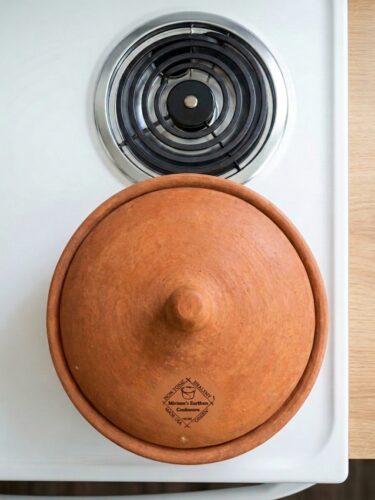
What Is Non-Toxic Cookware and Why It Matters
Common Toxins Found in Traditional Cookware
The term non-toxic cookware is used loosely in the market, but understanding what conventional cookware actually contains helps clarify why the distinction matters.
PTFE and PFAS compounds: Traditional non-stick coatings are made from PTFE or Teflon. When heated above temperatures that are easy to reach on a home stovetop, PTFE begins to break down and release compounds belonging to the PFAS family, a group of synthetic chemicals sometimes called forever chemicals because they do not break down in the environment or in the human body. PFAS exposure has been linked to thyroid disruption, immune suppression, hormonal imbalance, and increased cardiovascular risk.
Aluminum: Uncoated aluminum is one of the most reactive common cookware materials. Aluminum exposure has been studied in connection with neurological health, and while the research is ongoing, the precautionary principle applies particularly for daily cooking vessels used over decades.
Nickel and chromium: Stainless steel is more stable than aluminum but is not entirely inert. Lower-quality stainless steel alloys can leach nickel and chromium into food, particularly under prolonged heat. Nickel is a known allergen and sensitizer, and chromium in its hexavalent form is a recognized carcinogen.
Glaze compounds in ceramic cookware: Ceramic cookware, including many products marketed as non-toxic alternatives, typically involves a glazed surface. Ceramic glazes can contain compounds including antimony oxide, barium carbonate, manganese dioxide, and chrome oxide, none of which are typically disclosed on the product label and some of which carry documented health concerns.
How Everyday Cooking Impacts Long-Term Health
The key word here is cumulative. No single meal cooked in a coated pan produces an acute health crisis. The concern is the accumulation of small, repeated exposures over months, years, and decades of daily cooking.
The body’s detoxification systems (primarily the liver, kidneys, and lymphatic system) are sophisticated and capable. But they were not designed to manage the volume and variety of synthetic compounds that characterize modern kitchen cookware. When the toxic load from everyday sources like cookware consistently exceeds what the body can efficiently process, the excess accumulates in tissues and organs, contributing to inflammation, hormonal disruption, cardiovascular stress, and neurological burden over time.
Reducing that load through the simple, repeatable choice of what you cook in is one of the most practical and impactful health decisions available to anyone.
How Non-Toxic Cookware Protects Your Heart Health
Reducing Exposure to Chemicals Linked to Cardiovascular Risk
The connection between PFAS compounds and cardiovascular health is one of the most well-documented areas of concern in cookware safety research. Studies have found associations between PFAS exposure and elevated cholesterol levels, increased blood pressure, arterial inflammation, and heightened risk of cardiovascular disease.
The mechanism is not fully understood but is believed to involve PFAS interference with lipid metabolism and hormonal signaling. Both of which play central roles in cardiovascular function. Because PFAS accumulates in the body over time rather than being efficiently excreted, the cardiovascular risk associated with low-level daily exposure through cookware compounds with each passing year of use.
Switching to cookware that contains no PFAS, no synthetic coatings, and no reactive metal surfaces removes one of the most consistent sources of daily cardiovascular chemical stress from the kitchen entirely.
Preserving Nutrients That Support Heart Health
Non-toxic cookware does not just remove harmful exposure, it actively supports better nutrition by preserving the heart-healthy compounds in food during cooking.
Foods that support cardiovascular health (leafy greens rich in folate and vitamin K, omega-3 fatty acids in fish and certain seeds, polyphenols in tomatoes and peppers, potassium in root vegetables) are among the most heat-sensitive nutrients in the diet. Aggressive high-heat cooking in metal pans destroys a meaningful proportion of these compounds before they ever reach the plate.
Pure clay cookware radiates far-infrared heat gently and evenly from all directions, cooking food at lower effective temperatures without sacrificing thorough cooking. This gentler thermal environment preserves more of the heat-sensitive vitamins, antioxidants, and healthy fats that support cardiovascular function, giving your heart more of what it actually needs from the food you are already choosing carefully.
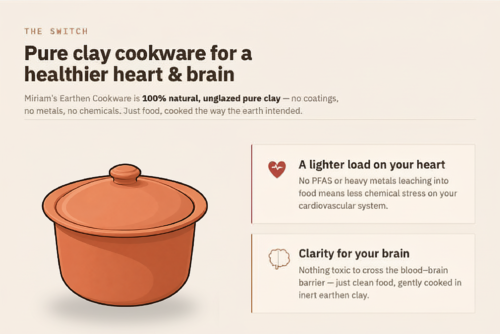 Benefits for Brain Health and Cognitive Function
Avoiding Heavy Metals and Neurotoxins in Cooking
The brain is particularly vulnerable to heavy metal exposure. Unlike most other organs, the brain is protected by the blood-brain barrier, but certain metals, including aluminum, lead, and manganese in excessive amounts, are capable of crossing that barrier and accumulating in neural tissue over time.
Aluminum exposure in particular has been studied extensively in connection with neurological health. While the scientific consensus on aluminum and neurodegenerative disease remains an area of active research, the precautionary approach is clear: minimizing aluminum exposure from daily sources, including cookware, is a reasonable and low-cost protective measure.
Lead and cadmium, which can be present in glazed ceramic and low-quality clay cookware, are established neurotoxins with no safe level of exposure. Both accumulate in the body over time and have been linked to cognitive decline, developmental neurological harm, and long-term brain health deterioration.
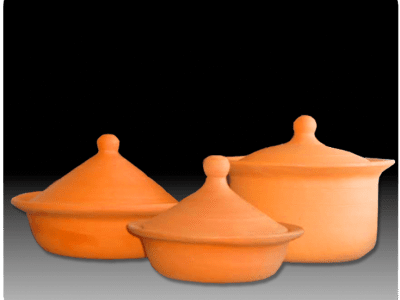
Miriam’s Earthen Cookware is tested and certified free of lead and cadmium, completely and verifiably. And because it is made from unglazed primary clay with no additives, there are no hidden compounds to question, no glaze chemistry to scrutinize, and no synthetic materials that could contribute to neurotoxic exposure during cooking.
Supporting Brain Function Through Better Nutrition
What the brain needs to function well at the cellular level is a reliable supply of specific nutrients, omega-3 fatty acids for membrane integrity and anti-inflammatory signaling, B vitamins including folate and B12 for neurotransmitter production and myelin health, magnesium for synaptic function, and antioxidants to protect neural tissue from oxidative stress.
These are precisely the nutrients most vulnerable to destruction by high-heat cooking in reactive cookware. Omega-3 fatty acids oxidize under high heat. Folate is water-soluble and heat-sensitive. Antioxidants degrade in hot reactive environments. When cookware contributes to the destruction of brain-supportive nutrients during cooking, it is working against cognitive health even before any direct chemical exposure is considered.
Clay’s gentle far-infrared heat preserves these compounds more effectively than any metal cookware, giving the brain more of what it needs from every meal.
Important Kitchen Changes for a Healthier Heart, Brain, and Life
The path to better long-term health does not always require dramatic intervention. Sometimes it begins with a single quiet decision made in the kitchen, the decision to stop cooking in materials that add something unwanted to every meal, and to start cooking in a material that adds nothing at all.
Non-toxic cookware is not a cure. But it is a foundation. A daily reduction in chemical exposure that compounds quietly over years. A cooking environment that preserves more of the nutrients your heart and brain depend on. A kitchen that works with your health rather than against it, every single day, one meal at a time.
Miriam’s Earthen Cookware is that foundation. Pure clay. Nothing added. Everything protected.


0 Comments
Write a Comment