
FAQs:
Ordering & Shipping (1)
When taken care of the right way, MEC pots can last a very long time. Some traditional clay cooks replace their pots once a year or at least once every 2 years, that is because it is believed that in this time the food would have extracted nutrients from the clay as needed (much of food today is nutritionally lacking to an extent because of the commercial growing and processing practices).
Another reason they replace the pot within this time frame is because the pot may have shrunk to a point where it can no longer fortify the food with oxygen. Being porous, the pot allows food to “take in” air, oxygenating the food while cooking, but it slowly shrinks over time and after many months of use the pores come together tightly allowing less and less air and oxygen to be taken in.
Those aware about the nutritional fortification and the pots ability to breathe change theirs every 1-2 years. However, the pot itself is functional and cooks your food even after this time period.
Usage & Care (1)
Miriam’s Earthen Cookware’s useful life cycle can span for decades, or even across generations. However, there may come a time where you can no longer cook with it due to damages or long-term wear. Despite this, there are several uses for your MEC product, even after it can no longer cook!
Note: Before writing off your MEC product as unusable due to a crack, please note that 80% of cracks can be healed, and you can use MEC for cooking again after healing a crack. However, there are rare instances where the crack does not heal, rendering the pot unusable.
Here are some recommended uses for your pot/pan after its useful life cycle:
For Sprouting Beans & Lentils:

Sprouting beans and lentils in Miriam’s Earthen Cookware is an easy process yeilding rich and nutritious sprouts. Because these pots are breathable and rich in nutrients, the process of germination is fast and food looks rich and healthy, for example, as you can see in the picture, the shoots are not limp or weak in appearence – the way they turn out in metal or plastic containers. For Sprouting: Soak the lentils for 8-12 hours, beans for 24 hours. Drain the water and add your soaked lentils and beans to the pot. Set aside in a warm, dark place covered for 24 hours for lentils and 36 hours for beans. If lentils/beans were purchased more than 6 months ago, increase soak and germination times by 8 hours.
For Fermenting Sauerkraut, kefir, yogurt, and more:
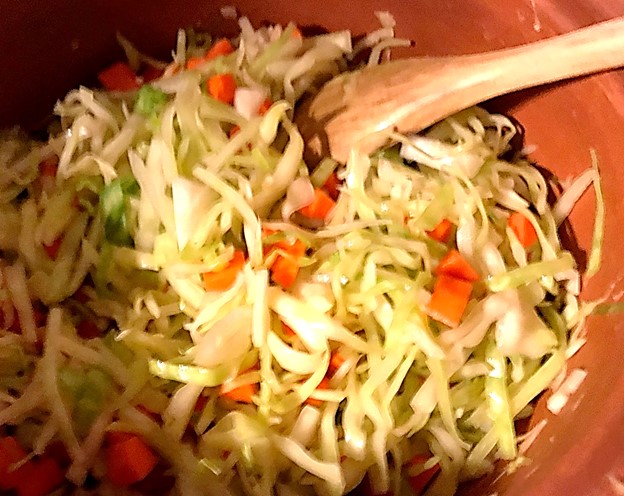
Fermenting in clay has been scientifically proven to be better than other vessels because it enhances gas transportation and it keeps conditions inside the pot suitable for lactic acid bacteria growth, by allowing for the pot’s porous walls to ‘exhale’ carbon-dioxide, a bi-product of lactic acid bacteria development. With Miriam’s non-toxic and well-designed wide mouth pots, this process is much healthier and easy.
While fermenting could take days or sometimes even weeks to accomplish in other vessels, because these pots are breathable, it allows just enough oxygen to get in and beautifully ferments your food in 1-2 days the longest. For Fermenting: Add your prepared ingredients to the pot, add sea salt, mix thoroughly, cover by placing lid up-side-down (this allows for lid to press against the food inside). Set aside to ferment for 24-48 hours. It is a good idea to season your pot before using for fermenting.
For storing food in or outside of the fridge:
 For Food Storage: You may store your eggs, flour, beans, potatoes in a safe and non-toxic way in these pots. The EMF radiation from refrigerator causes depletion of essential nutrients but storing your food outside (of the refrigerator) in these pots can prevent this nutritional loss. Customers who store their eggs say “they last longer and taste fresher”. If storing eggs, please place a folded towel in the bottom of the pot as a cushion.
Storing Fruits & Veggies: It can be used to store fresh fruits and vegetables in the fridge. Produce lasts longer and remains fresh because the inert pot prevents depletion of nutrients caused by EMF radiation (electro-magnetic field radiation).
Organic Sprouting: Your beans/lentils will thrive in the breathable, nutrient rich pot/pan and sprout more fully than in other vessels.
Organic Gardening:
 For Organic Gardening: Add soil, add your seeds, place the pot in a spot that can get sufficient sunlight. It is a good idea to elevate the pot slightly to allow for air circulation and drainage. A tip to watering your plants: Check to see if the soil is dry and if it is dry, water the plant. Don’t overwater, to the extent that you see water stagnant on the surface.
Other uses:
Natural refrigirator during camping:
Going camping? Or living off the grid and need a place to store fresh food for a few days? Your damaged pot can make a great natural refrigerator. Just wet the whole pot under running water for 2 minutes, drip dry, place the foods you need refrigerated inside, dip the lid in water, then close the pot. You can safely store milk, fruits, vegetables, bread, and so on for some time. The pot & lid will let the water evaporate very slowly, keeping the food inside cool and safe. How long food can stay without going bad depends on the weather and your location, so we recommend storing small quantities starting out.
Natural Fertilizer:
If you can’t find any extra use from your MEC product because it is too damaged, don’t worry! Since our pots are 100% compostable, you can safely dispose them by breaking them up into smaller pieces and using them as an all-natural fertilizer for your garden.


