
Rediscovering Ancient Wisdom: Why Cooking Quinoa, Millets, and Other Ancient Grains in Clay Preserves Nutrition and Unlocks Superior Flavor
 Ancient grains are back, and for good reason. Quinoa, millet, amaranth, teff, and sorghum have nourished people for thousands of years and are now prized for their impressive nutrition and versatility. But here’s what often gets overlooked: these grains deserves an equally time-honored way of cooking. Cooked in pure clay, these grains retain more of their natural goodness while developing deeper, fuller flavor.
The Rising Popularity of Quinoa, Millets, and Other Ancient Grains
Why Ancient Grains Are Considered Nutritional Powerhouses
Ancient grains have earned their reputation. Quinoa is a complete protein, delivering all nine essential amino acids, a rarity in the plant world, along with fiber, magnesium, and iron. Millets are naturally gluten-free and rich in minerals, with finger millet (ragi) that has almost 3 times the calcium in milk or yogurt! Across the board, ancient grains nutrition tends to mean more fiber, more minerals, and more slow-digesting energy than heavily refined modern grains, which is also a big part of their appeal.
Today’s whole-grain revival is really a return to wisdom. As families choose less-processed foods, they’re rediscovering the grains that nourished generations, and the time-tested cookware used to cook them.
How Clay Pot Cooking Helps Preserve the Nutritional Value of Ancient Grains
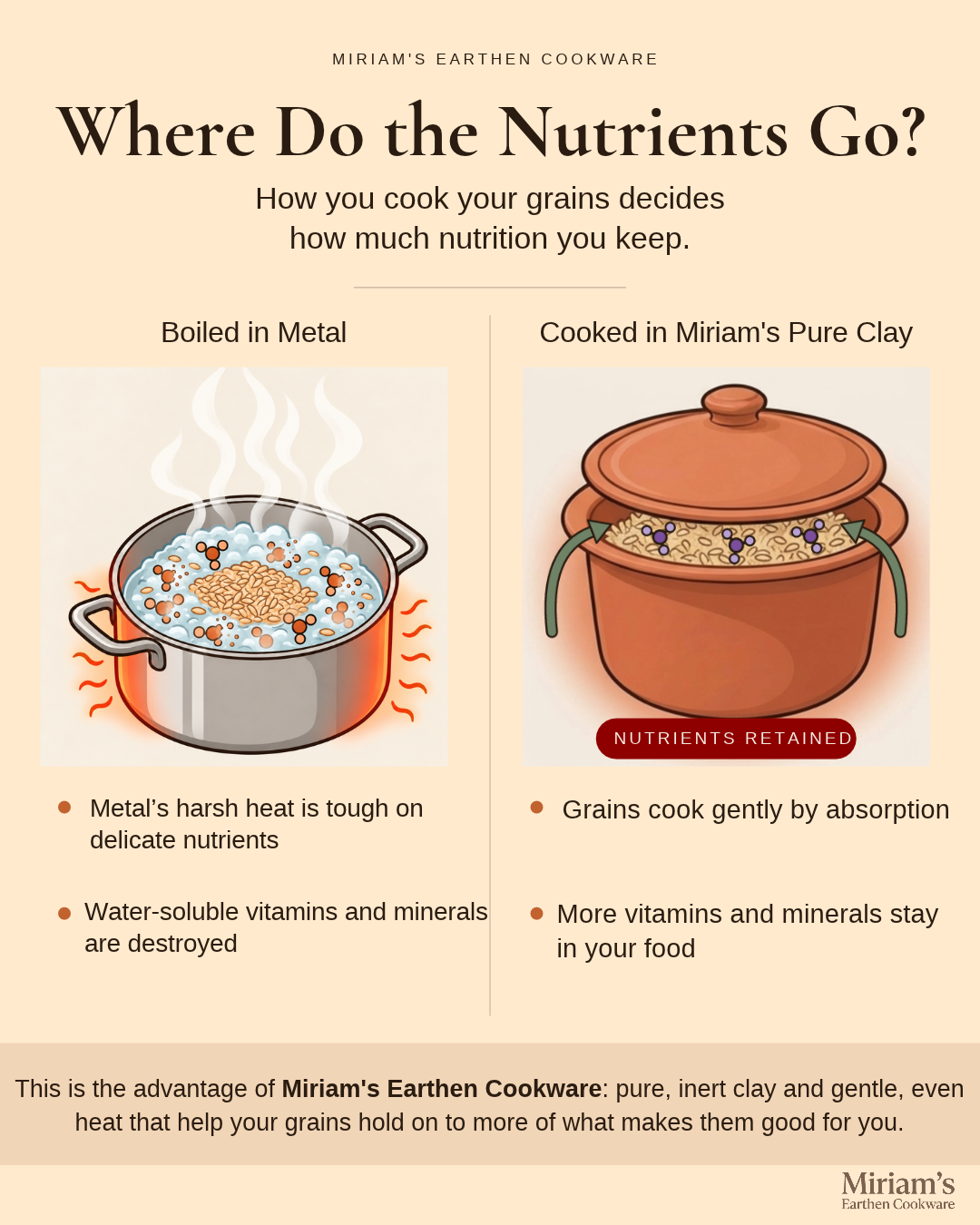
In traditional cooking, how food is cooked matters as much as what is cooked. Nutrients, especially water-soluble vitamins, can be lost when grains are boiled in excess water and that water is discarded.
Heat matters, too. High, aggressive metalic is hard on delicate nutrients and proteins. This is why traditional cooks favored slower, gentler cooking, and clay provided exactly that: steady, even heat that cooks grains without subjecting them to harsh, concentrated temperatures.
The Role of Even Heat in Nutrient Retention
This is exactly what pure clay does well. Miriam’s clay radiates a deep, even, far-infrared warmth, the same kind of gentle, life sustaining heat the earth itself gives off, surrounding grains from every side rather than blasting them from a single hot surface. Food cooks by absorption, taking in its liquid instead of being boiled and strained, so the vitamins and minerals stay in the dish where they belong. The even, gentle heat also means no scorching and no need to crank the temperature, both of which help protect the heat-sensitive nutrients that aggressive cooking tends to diminish.
Why Clay Cookware Is Preferred for Healthy Grain-Based Meals
Beyond nutrient retention, pure clay brings qualities that suit grains beautifully. It holds moisture, so grains cook up tender and evenly hydrated rather than dried out or unevenly done. And because real and natural clay is completely inert, it adds nothing to your food, no metallic taste, no reactivity, just the grain’s own flavor.
This is where it’s worth knowing that not all clay cookware is equal. Many pieces are glazed, and lower-quality or imported glazes can contain lead or cadmium, and often aren’t independently tested at all. Miriam’s Earthen Cookware is made from 100% primary clay, crafted in the USA, polished smooth by hand with no glaze whatsoever, and independently tested and certified free of lead and cadmium. Thoughtful design features, like the steam-condensing lid that recirculates moisture back into the pot, make it especially well suited to cooking grains by keeping all their nutrients intact.
Why Quinoa and Millets Taste Better When Cooked in Miriam’s Earthen Cookware
How Natural Clay Enhances Texture and Flavor
Nutrition aside, there’s a reason traditional cooks never gave up their clay pots: the food simply tastes so much better! Pure clay’s even, enveloping heat cooks each grain consistently, so you get fluffy, separate quinoa and tender millet rather than a gummy or scorched pot. With no coating or metal to impart off-flavors, the natural, nutty character of the grains comes through cleanly.
Achieving Perfectly Cooked Grains Without Excess Moisture Loss
Grains live or die by moisture control, and this is one of clay’s strengths. Miriam’s steam-condensing lid hold moisture inside the pot and return it to the grains, so they cook through evenly without drying out or needing constant checking. The result is reliably well-cooked grains with a better texture, using less fuss and often less water than metal pots demand.
 Comparing Miriam’s Pure Clay to Modern Metal and Nonstick Cookware for Grain Preparation
Differences in Heat Distribution and Cooking Performance
Thin metal pots are prone to hot spots, which is why grains so often scorch on the bottom while cooking unevenly on top. Pure clay heats differently: the same kind of gentle, sustaining warmth naturally emitted by the Earth, which supports life as we know it., holding a steady warmth that keeps cooking gently even after the burner is lowered. For grains, which reward patience and consistency, that even performance is a real advantage.
Which Cookware Best Supports Flavor, Texture, and Nutrition?
Nonstick cookware adds another consideration. Its synthetic coatings can release unwanted compounds into food during normal cooking, which is exactly what many people are trying to move away from. Pure clay has no coating that can break down and nothing to leach, so it supports flavor, texture, and nutrition all at once!
Getting started is easy. Cook a pot of quinoa or millet in Miriam’s clay and use it as a base for grain bowls, fold it into soups and stews, serve it alongside vegetables, or enjoy it as a warm breakfast porridge. Prepared gently in pure clay, these everyday meals hold on to more nutrition and more flavor, proving that sometimes the healthiest step forward is a step back toward tradition.
Embracing Ancient Cooking Wisdom for a Healthier, More Sustainable Kitchen
Combining Traditional Clay Cooking with Modern Wellness Goals
Cooking ancient grains in Miriam’s Earthen Cookware is a simple way to bring old wisdom into a modern wellness routine. You get the nutritional upside of whole, ancient grains, the nutrient-preserving benefits of gentle clay cooking, and the peace of mind of a pure, non-toxic surface, all from a single pot that’s been doing this job for millennia. Traditional food wisdom even has a name for the slow shortfall that can happen when meals look nourishing but deliver less than they should, sometimes called hidden hunger. Whatever its many causes, the thinking behind clay cooking is a hopeful one: that preparing good food gently, so more of its nutrition survives the pot, is one small, everyday way to get more from the wholesome ingredients you already choose.
Simple Ways to Incorporate Ancient Grains into Everyday Meals
Getting started is easy. Cook a pot of quinoa or millet in Miriam’s clay and use it as a base for grain bowls, fold it into soups and stews, serve it alongside vegetables, or enjoy it as a warm breakfast porridge. Prepared gently in pure clay, these everyday meals hold on to more nutrition and more flavor, proving that sometimes the healthiest step forward is a step back toward tradition.


1 Comment
Keeli Playne said:
🥰 Hello Miriam! It’s Keeli in Fl, (bad teeth😩) We are enjoying our clay cookware that you so generously gifted us! I was wondering if you have considered making a line of smaller pots with lids? It’s just the 2 of us, and we are trying not to live on leftovers! I would appreciate a smaller size for single servings. I would be happy to pay for a custom trial run. What do you think?
Is there much demand for single servings for one small meal?
🙏 Pray you are well. Thank you for taking the time to read this! 💜
Write a Comment