
Is Cast Iron Cookware Safe? The Healthier, Cleaner Alternative Revealed
Cast iron has earned a devoted following. It’s durable, holds heat well, and for anyone trying to move away from synthetic nonstick pans and their “forever chemicals,” it often feels like the obvious healthy choice.
But is it really the healthiest cookware you can use? The honest answer is: cast iron is a reasonable option, but it isn’t what you want if you want looking for the healthiest option. If your goal is the cleanest, most inert way to cook, there’s a time-honored material worth knowing about: pure, unglazed clay.
Let’s take an honest look at cast iron, including a few things its glowing reputation tends to skip over, and why pure clay may be the cleaner option you’ve been looking for.
The Appeal of Cast Iron Cookware
Cast iron has some strengths: it’s durable, retains heat well, and is free of the synthetic PTFE and PFAS coatings found on nonstick pans. That makes it a genuine step up from coated cookware, and it’s easy to see why it’s a kitchen favorite.
But “better than nonstick” isn’t the same as “the healthiest option available,” and cast iron comes with a few trade-offs that rarely make it into the conversation.
What Cast Iron’s Reputation Leaves Out
Here’s what often goes unmentioned in cast iron’s glowing reputation.
It’s reactive. Cast iron reacts with both acidic and basic (alkaline) foods. Both types of food cause a reaction with the cookware allowing it to leach in and resulting in a metallic taste, while the reaction can also strip the pan’s seasoning.
The “seasoning” isn’t always as natural as it sounds. Most cast iron today comes pre-seasoned with, and is maintained using industrial vegetable and seed oils (like soybean, canola, or a blend). Every time you re-season, you’re baking more of those oils onto your cooking surface. For the growing number of people choosing to avoid industrial seed oils, that’s worth knowing, because with cast iron, oil isn’t optional; it’s built into how the cookware works.
It’s high-maintenance. Cast iron requires ongoing seasoning, careful drying to prevent rust, and specific cleaning practices. It’s also heavy, which isn’t ideal for everyone.
It can create hot spots and generates harsh, damaging heat. While cast iron retains heat well, it can also cook aggressively, and that intense heat also called near-infrared heat is not gentle on delicate foods or the nutrients within them.
Cast iron isn’t the flawless, one-size-fits-all healthy option it’s often made out to be.
Is the Iron From Cast Iron Actually Good for You?
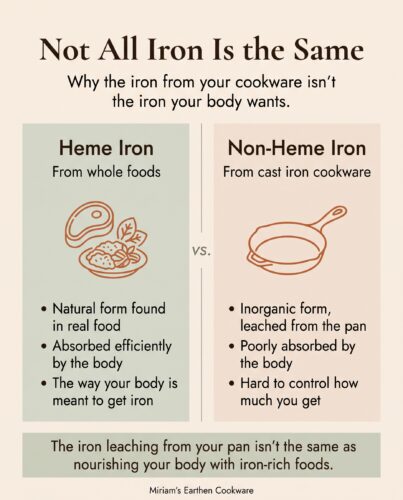
One of cast iron’s most-cited selling points is that it “adds iron” to your food. And it does, iron migrate from the pan into your meal as you cook. But it’s worth understanding what kind of iron that is, because not all iron is the same.
Heme vs. Non-Heme Iron
Cast iron adds non-heme iron, the inorganic form, which is different from the heme iron your body gets from whole foods like lentils, nuts, grains, vegetables and meat, and it’s absorbed far less efficiently.
Why Your Body Holds On to Excess Iron
Here’s what most people don’t realize: your body has no easy way to get rid of excess iron. Unlike many nutrients that your body simply flushes out when it has enough, iron is regulated almost entirely by how much you absorb, not how much you excrete, so once it’s in, it largely stays. That’s exactly why the source matters. When you get iron from whole foods, red meat, poultry, fish, and leafy greens, your body takes it in naturally and takes what it needs. But the non-heme iron leaching from a pan is poorly absorbed and impossible to measure, so you’re adding an unpredictable amount you may not need. For individuals who tend to accumulate iron (or who have conditions like hemochromatosis) it can become toxic.
It’s simply one more reason to let your food, not your cookware, be the source of your nutrition.
The Cleaner Option: Miriam’s Pure Clay Cookware
If what you really want is cookware that adds nothing toxic to your food, pure clay deserves a serious look.
Completely Inert, Nothing Leaches
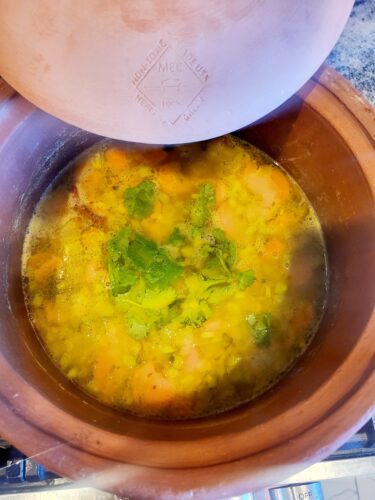
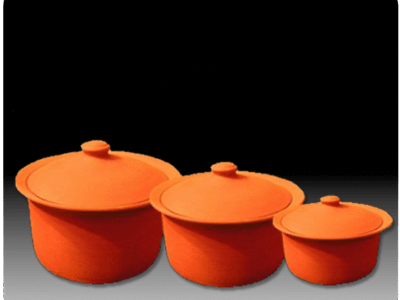
Unlike cast iron, pure clay is completely inert. Miriam’s Cookware is made from natural primary clay sourced in the US and finished by hand burnishing without any toxic glaze, Miriam’s doesn’t react with your food. There’s no metallic taste, no seasoning to strip, and nothing leaching in. You can cook tomatoes, curries, beans, and everything in between without a second thought.
Because clay is inert, it also doesn’t transfer metals into your meals the way cast iron transfers iron. What you put in the pot is what you get out, just your food, unchanged. That makes it an especially reassuring choice for people who are mindful of what they are eating and want the purest possible cooking surface.
Gentle, Far-Infrared Heat That Helps Preserve Nutrients
Clay cooks with gentle, far-infrared heat that radiates evenly. Rather than the harsh, direct contact of metal, that far-infrared warmth surrounds food from every side and holds moisture beautifully, which is why clay is so prized for stews, grains, beans, and slow-cooked dishes. And because the heat is so even and moisture-rich, it can also help spare the delicate nutrients that aggressive, metal heat tends to degrade.
Miriam’s pure clay pots and pans are durable, free of synthetic coatings, and develop a naturally non-stick surface with use, no chemicals required. It simply does it all while staying completely inert.
Cast Iron vs. Miriam’s Pure Clay: Which Cookware Should You Choose?
If you’re asking whether cast iron is truly the healthiest, cleanest cookware available, the honest answer is NO, and this is becuase of two main reasons: the perpetual leaching of the metal into food, and the damage the harsh heat causes to the nutrients.
For cooks who want the purest, gentlest, most natural way to prepare their meals, Miriam’s isn’t just an alternative to cast iron, it may be the cleaner option you’ve been searching for all along.
Ready to Try the Cleanest Cookware for Your Kitchen?
Miriam’s Earthen Cookware is handcrafted in the USA from 100% pure primary clay, fully finished by hand burnishing without any toxic glaze, and tested and certified free of lead and cadmium. No coatings, no reactive metals, nothing to leach, just pure, natural and inert clay and the gentle, wholesome cooking it’s been trusted for across thousands of years. Discover the cleaner way to cook.


0 Comments
Write a Comment