
The Most Nutritious Vegetables and How to Cook Them Without Losing Their Benefits
You can buy the most nutrient-dense vegetables at the farmers market, source them organic, wash them carefully, and still lose a significant portion of their nutritional value before they ever reach the plate. How vegetables are cooked matters just as much as which vegetables you choose. And what they are cooked in matters more than most people ever think to ask.
This week, we’re ranking the most nutritious vegetables, breaking down exactly how to cook them to retain maximum nutrients, and explaining why pure unglazed clay cookware produces results that no metal pan, coated pot, or conventional cooking method can replicate.
Why Nutrient Retention Matters When Cooking Vegetables
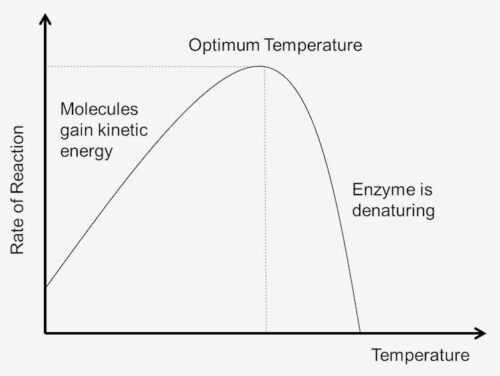
What Nutrients Are Lost During Cooking?
Not all nutrients behave the same way under heat. Understanding which ones are most vulnerable helps you make smarter decisions about how you cook.
Water-soluble vitamins — Vitamin C and the B vitamins including folate, B1, B2, B3, and B6 are the most susceptible to cooking loss. They dissolve readily in water and degrade quickly under heat, which is why boiling vegetables can eliminate a substantial portion of these nutrients before you even sit down to eat.
Heat-sensitive phytonutrients — Compounds like glucosinolates in cruciferous vegetables, polyphenols in leafy greens, and certain antioxidants are damaged by sustained harsh and high heat from metals. Gentle clay cooking on the other hand preserves them far better than prolonged high heat.
Fat-soluble vitamins — Vitamins A, D, E, and K are more heat-stable than water-soluble vitamins but can still be affected by oxidation at high temperatures, particularly in the presence of reactive cookware surfaces.
Enzymes — Naturally occurring digestive enzymes in raw vegetables are deactivated above certain temperatures. While some cooking is beneficial for digestibility, excessive harsh heat destroys enzymatic activity entirely.
Do Metals and Chemicals Affect Food Quality?
This question does not get asked enough. The answer is yes! And the degree depends on the material.
Uncoated aluminum is reactive, and leaches aluminum into food during cooking. Stainless steel is a little more stable but is not entirely inert, it leaches, nickle, molybdenum, chromium, iron and sometimes even aluminium. Non-stick coatings add an additional layer of concern: PTFE-based coatings begin to break down at temperatures that are easy to reach on a home stovetop, and even replacement coatings marketed as ceramic or “green” have limited long-term safety data and degradation profiles that are not fully disclosed.
When a reactive or coated surface introduces compounds into food during cooking, those compounds become part of what is consumed. For anyone choosing nutrient-dense vegetables specifically to support their health, this is an important consideration.
What Makes Pure Unglazed Clay Cooking Different
Not all clay cookware is the same. The distinction that matters most is between primary clay and secondary clay, and between unglazed and glazed.
Primary clay is clay in its most natural, unaltered state, extracted directly from the earth without significant mineral contamination and used without additives, binders, or synthetic processing. It is chemically stable, non-reactive, and completely inert in contact with food. Secondary clay has been exposed to other minerals and contaminants through water transport over time and requires more processing to be usable.
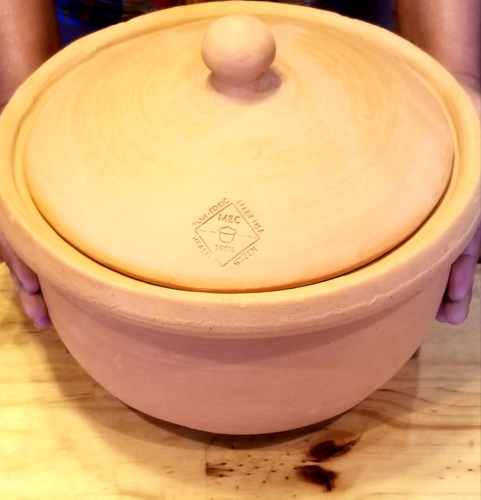
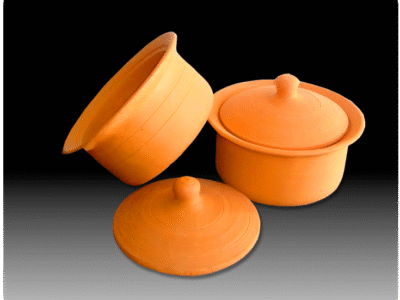
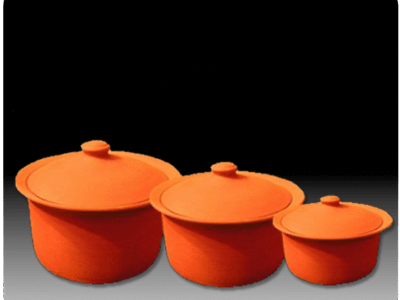
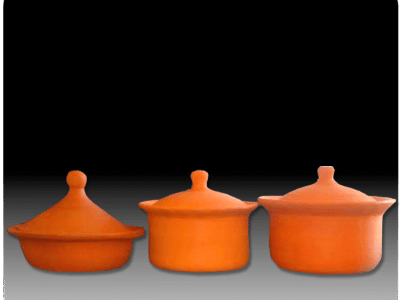
Miriam’s Earthen Cookware is made exclusively from 100% primary clay sourced in the USA. No additives, no synthetic materials, no compromises. Every piece is tested and certified free of lead and cadmium.
Non-Toxic Cooking Means No Glazes, No Chemicals, and No Leaching
This is where Miriam’s Earthen Cookware separates itself most clearly from every other clay or ceramic cookware brand on the market. Glazed cookware involves a glass-like coating fired onto the clay surface, and the composition of those glazes is more complex than most people realize. Ceramic glaze ingredients include compounds like antimony oxide, barium carbonate, manganese dioxide, and chrome oxide none of which are typically disclosed on a cookware label. Even glazes that test within acceptable regulatory limits involve an undisclosed combination of materials sitting between your food and the clay beneath.
Beyond the glaze, ceramic cookware itself is typically composed of a blend of clay types, minerals, and additives that vary by manufacturer and are rarely fully transparent to the consumer. It is a far more complex material than it appears, and complexity in cookware ingredients is rarely a good thing.
Miriam’s Earthen Cookware has no glaze. No coating. No finish of any kind. The surface that touches your food is pure, unaltered primary clay. It is exactly what it appears to be and nothing else. For anyone serious about non-toxic cooking, this distinction is not a minor detail. It is the entire point.

Most Nutritious Vegetables and How They Benefit from Clay Pot Cooking
Leafy Greens: Spinach, Kale, Swiss Chard
Leafy greens are among the most nutrient-dense foods available! Rich in vitamins K, A, C, and folate, as well as iron, calcium, and a wide range of antioxidants. They are also among the most sensitive to heat and water, which makes cooking method particularly important.
In a metal pan with its near infrared harsh heat, leafy greens can lose a significant portion of their vitamin C and folate in minutes. In a covered MEC pot on low heat with minimal water, they wilt gently and evenly, preserving color, texture, and nutritional integrity far better than any high-heat method.
Spinach and Swiss chard take just a few minutes. Kale benefits from slightly longer cooking with a small amount of liquid to soften its tougher cell structure. All three respond beautifully to the self-basting environment of a covered pure clay pot.
Cruciferous Vegetables: Broccoli, Cauliflower, Cabbage
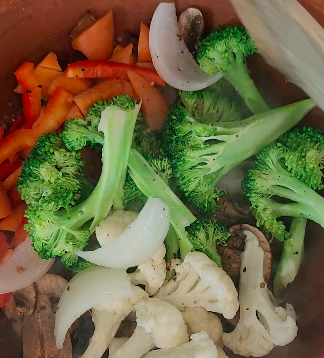
Cruciferous vegetables are nutritional powerhouses. They are exceptionally high in vitamin C, vitamin K, folate, and glucosinolates, the cancer-protective compounds that have made this family of vegetables a consistent focus of nutritional research.
Glucosinolates are particularly sensitive to heat and water. Boiling broccoli can reduce glucosinolate content by as much as 40 to 50%. Steam cooking preserves more, but the fixed high temperature of steam still degrades meaningful amounts over time.
Clay pot cooking at low to medium heat with minimal water preserves glucosinolates more effectively than either boiling or conventional steaming which gives you more of the compounds that make cruciferous vegetables worth eating in the first place.
Root Vegetables:Carrots, Sweet Potatoes, Beets
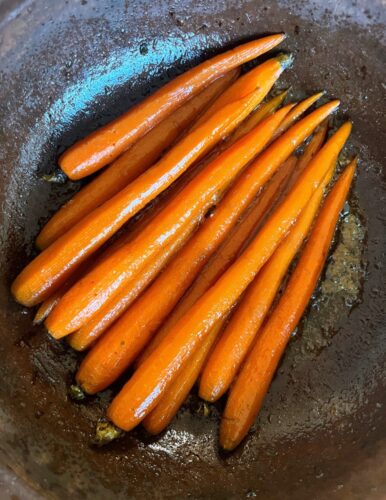
Root vegetables are dense, naturally sweet, and packed with beta-carotene, potassium, manganese, and B vitamins. They require longer cooking times than leafy greens or cruciferous vegetables, which makes the gentleness of clay heat particularly beneficial.
In a metal pan at high heat, the exterior of a root vegetable can overcook and begin to break down while the interior is still working its way through. In a clay pot, the far-infrared heat penetrates from all directions, cooking the vegetable through more evenly and allowing the natural sugars to develop slowly into something deeply sweet and complex without losing moisture or nutritional density.
Sweet potatoes, carrots, and beets all reach their peak flavor and texture when cooked low and slow in Miriam’s Earthen Cookware. The difference compared to a metal pan or a conventional oven sheet is noticeable from the first bite.
High-Water Vegetables: Zucchini, Tomatoes, Peppers
High-water vegetables are quick cooking and delicate therefore easy to overcook into a mushy, nutrient-depleted version of themselves. They are rich in vitamin C, lycopene, and various antioxidants, all of which are sensitive to heat and particularly vulnerable to high-temperature metal cooking surfaces.
In a covered clay pot on low heat, high-water vegetables cook in their own moisture. The steam they release is captured by the lid, cooled, and returned, creating a closed cooking environment that keeps them tender without waterlogging them or driving off their heat-sensitive compounds. Tomatoes, zucchini, and peppers in pure clay retain their color, their structure, and a noticeably richer flavor and taste than the same vegetables cooked in a metal pan at higher heat.
Cookware Conversations Q&A
Does clay cooking really preserve more nutrients in vegetables? Yes, and the reason is very specific! Clay’s far-infrared heat distributes temperature more evenly and gently than metal cookware, reducing the localized overheating that destroys heat-sensitive vitamins and phytonutrients. The self-basting lid also recycles moisture and reduces the need for excess water, which minimizes water-soluble vitamin loss. The combination of these two factors makes clay pot cooking one of the most nutrient-preserving cooking methods available.
Are all clay pots non-toxic? No. The term non-toxic is not regulated and is used loosely across the entire cookware industry. Clay pots can vary significantly in clay quality, glaze composition, and manufacturing standards. Truly non-toxic clay cookware should be made from 100% primary clay, be completely unglazed, and have published third-party testing for lead and cadmium. Miriam’s Earthen Cookware checks all the boxes. We are not dictated by standards, rather, we are compelled by a higher virtue of doing that absolute right thing – becuase that is what is healthy for the human race.
Is clay cooking better than steaming? For most vegetables, yes — and the reason comes down to temperature control and the cooking environment. Conventional steaming uses fixed 212°F steam, which is higher than necessary for many vegetables and can degrade sensitive compounds over time. Clay pot cooking with minimal water and a covered lid creates a self-basting steam environment at lower, more controllable temperatures giving you the moisture benefits of steaming with gentler, more nutrient-friendly heat.
Combining the Right Food With the Right Cookware
The most nutritious vegetables in the world are only as good as the conditions they are cooked in. Choosing nutrient-dense vegetables is an excellent starting point, but pairing them with cookware that protects rather than degrades their nutritional content is what completes the equation.
Pure unglazed clay cookware from Miriam’s Earthen Cookware addresses every major cause of nutrient loss in a single material: gentle far-infrared heat, self-basting moisture retention, no reactive surfaces, and nothing added that does not belong in your food. It is not a supplement to healthy cooking. It is the foundation of it.
Whether you are cooking leafy greens for three minutes or simmering root vegetables for 30 minutes, the most nutrient-dense version of that meal starts with the right pot. 🌿
Shop Miriam’s Pure Clay Cookware


0 Comments
Write a Comment