
Collard Greens Recipes That Are Tender, Flavorful, and Better in a Clay Pot
If your collard greens have ever come out bitter, tough, or just flat, the pot you cooked them in might be more responsible than the recipe. Collard greens are a forgiving, deeply nourishing green that respond beautifully to the right cooking environment. And that environment, as it turns out, is pure clay.
This collard greens recipe is simple, flexible, and designed to get the most out of one of the most nutritious vegetables you can put on your table, cooked the way it deserves to be, in Miriam’s pure clay pots.
Why Cook Collard Greens in Clay Pots?
Gentle Heat for Even Cooking and Less Bitterness
The biggest mistake most people make with collard greens is cooking them too hot and too fast. High heat from metal pots concentrates bitterness, toughens the leaves, and drives off moisture before the greens have a chance to break down properly.
Clay changes this entirely. Rather than blasting food with direct conductive heat, clay radiates gentle far-infrared energy that penetrates the greens evenly from all directions. The result is collard greens that cook slowly and consistently, breaking down their natural toughness without losing their color, moisture, or nutritional value.
Better Flavor Without Metal or Chemical Interaction
Metal pots and chemically coated cookware interact with food during cooking, particularly with leafy greens, which are sensitive to their cooking environment. This interaction can affect both flavor and nutrient content in ways most people never think about.
Pure primary clay is completely inert. There are no glazes, no coatings, no metal ions leaching into your greens. What you taste is the food itself, and in the case of collard greens cooked in clay, that flavor is noticeably richer, cleaner, and more complex than anything you would get from a metal pot.
Are Collard Greens Good For You?
Collard greens are one of the most nutrient-dense vegetables you can add to your plate, and they are significantly underrated for it. A single cup of cooked collard greens delivers an exceptional amount of vitamin K, which supports bone health and healthy blood clotting, as well as vitamin A for immune function and eye health, and vitamin C for antioxidant support. They are also a surprisingly strong plant-based source of calcium, making them a valuable addition to any diet.
Rich in fiber, folate, and manganese, collard greens support digestive health, cardiovascular function, and sustained energy. And because they belong to the cruciferous vegetable family alongside broccoli, kale, and Brussels sprouts, they carry the same well-documented cancer-protective compounds, particularly glucosinolates, that have made this family of vegetables a consistent focus of nutritional research. In short, collard greens are not just a side dish. They are one of the most nourishing things you can put on your table!
How to Prepare Collard Greens for Cooking
How to Clean Collard Greens Properly
Fresh collard greens can carry dirt and grit in their leaves, so a thorough rinse is essential. Fill a large bowl or clean sink with cold water and submerge the leaves, swishing them around to loosen any debris. Lift the leaves out rather than draining the water, which would deposit the grit back onto the greens. Repeat if needed until the water runs clear.
Removing Stems and Cutting for Even Cooking
The stems of collard greens are significantly tougher than the leaves and take much longer to cook. For the most even texture, strip the leaves from the stems by holding the stem in one hand and pulling the leaf away with the other. Discard the stems or save them for stock.
Once stemmed, stack several leaves on top of each other and slice into strips or rough pieces depending on your preference. Thinner strips cook faster and are great for weeknight cooking. Larger pieces hold up better for longer braises and have a more substantial texture on the plate.

Collard Greens Recipe in Miriam’s Clay Pan
Serves: 4 Prep time: 15 minutes Cook time: 45 minutes to 1 hour
Ingredients:
- 1 large bunch fresh collard greens, cleaned, stemmed, and sliced
- 3 cloves garlic, minced
- 1 small onion, diced
- 2 tbsp olive oil or ghee
- 1.5 cups vegetable or chicken broth
- 1 Tablespoon Apple Cider Vinegar
- Salt and pepper to taste
- Optional: smoked turkey leg, or chicken for a traditional southern style
- Optional: pinch of red pepper flakes for heat
Step 1 — Preheating your Clay Pan the Right Way
Never place a cold clay pot directly onto high heat. Start with your Miriam’s pan on low and allow it to warm gradually for 3 to 5 minutes before increasing heat. This protects the integrity of the clay and ensures even heat distribution from the start.
Step 2 — Building Flavor Without High Heat
Add your oil or ghee to the warmed pan over low to medium heat. Add the diced onion and cook gently for 5 to 7 minutes until soft and translucent, then add the garlic and cook for another minute. If using smoked meat, add it here and allow it to warm through and release some of its flavor into the oil before adding the greens.
Step 3 — Slow Simmering for Perfect Texture
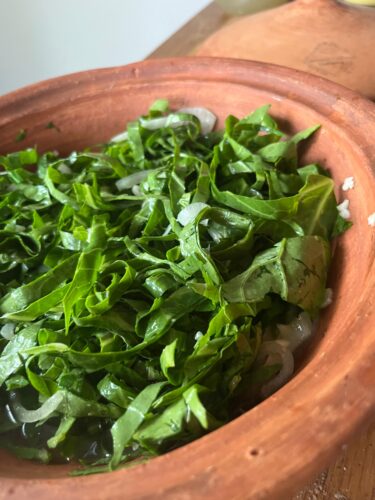
Add the collard greens to the pot in batches if needed, turning them gently to coat in the oil and aromatics. Pour in the broth, season with salt, pepper, and red pepper flakes if using, and bring to a gentle simmer. Cover and cook on low heat for 45 minutes to 1 hour, stirring occasionally, until the greens are tender and deeply flavored.
Step 4 — Finishing for Taste and Tenderness
Once the greens are tender to your liking, stir in the apple cider vinegar. This small addition brightens the overall flavor, balances any remaining bitterness, and pulls everything together. Taste and adjust seasoning as needed. Serve directly from the clay pan.
Collard Greens Recipe Variations
Vegetarian Collard Greens
Skip the smoked meat and add a teaspoon of smoked paprika and a splash of liquid smoke to the broth for a deeply flavored, fully plant-based version. Fully cooked white beans added in the last 15 minutes of cooking makes this a complete and satisfying meal.
Southern-Style Collard Greens
Add a smoked turkey leg or ham hock at the beginning of cooking and let it simmer with the greens for the full hour. The meat will become fall-off-the-bone tender.
Quick Weeknight Collard Greens
Slice the greens into thin strips and increase the heat slightly to medium. With thinner cuts and a bit more liquid, the greens can be ready in 25 to 30 minutes. Still tender, still flavorful, and still far better than anything you would get from a metal pan.
Cook It Right- Miriam’s Large Pan or Pot
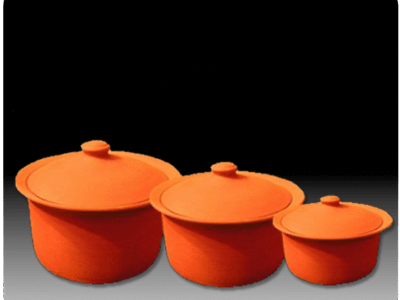
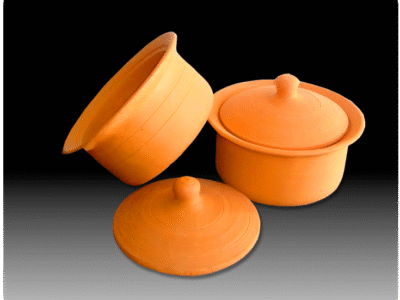
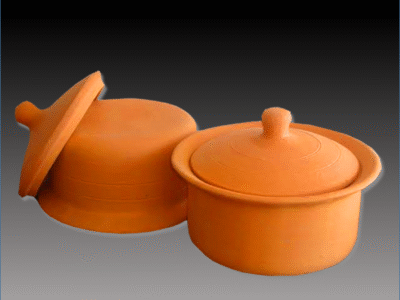
Every recipe is only as good as what it is cooked in, and for collard greens, Miriam’s Large Pan is the ideal vessel from start to finish.
Handcrafted in the USA from 100% primary clay with no glazes, no coatings, and no additives of any kind, Miriam’s Large Pan gives you a wide, generous cooking surface that is perfect for building flavor low and slow. The depth handles a full bunch of collard greens with ease, and the clay walls retain heat so consistently that once you reach your simmer you barely need to touch the dial again.
Unlike metal pans that react with leafy greens and affect both flavor and nutrient content, pure clay is completely inert. Nothing leaches. Nothing interacts. What goes in is what comes out, just cleaner, richer, and more deeply flavored than anything a conventional pan could produce.
Miriam’s Large Pan goes from stovetop to table in one beautiful piece, seasons naturally with every use, and becomes more non-stick over time rather than degrading like coated cookware. It is the kind of pan you buy once and cook in for life.
For more than just stir-fries, you can use Miriam’s Large pot to cook a wide variety of dishes. With the pot, you can make everything you would normally prepare in a pan—and so much more.

It’s especially great for soups and hearty meals, such as lentil and collard green soup, white bean and collard green soup, chicken and collard greens soup, or even a vegetable greens minestrone. You can also make stews, broths, and slow-simmered dishes with ease.
Miriam’s large pot is ideal for preparing all of these meals, giving you the space and versatility to cook nourishing, flavorful dishes beyond simple stir-fries.
Good Greens Start With the Right Pot
Collard greens have been a staple of nourishing, soulful cooking for generations, and for good reason! They are deeply nutritious, incredibly versatile, and when cooked the right way, genuinely delicious. The right way, as it turns out, has always been in a vessel that works with the food rather than against it. Pure clay has been that vessel for thousands of years, and Miriam’s Earthen Cookware brings that same principle into your kitchen today. Whether you are making a classic southern pot for Sunday dinner, a quick weeknight side, or a fully plant-based version loaded with white beans, these collard greens recipes are a good starting point. Once you try it in Miriam’s pure clay, no other pot will ever feel quite right again.


0 Comments
Write a Comment