
How to Cook Sweet Potatoes (Roasting, Steaming, Soups & Salads) Using Non-Toxic Clay Cookware
Sweet potatoes are one of the most versatile, nutrient dense, and genuinely delicious vegetables you can bring into your kitchen. They roast beautifully, steam to a silky tenderness, form the base of deeply warming soups, and hold up remarkably well in salads and meal prep. And like most vegetables worth cooking well, they respond to their environment, which means the cookware you use matters more than most people realize. This week, we’re covering everything you need to know about how to cook sweet potatoes. From roasting and steaming to soups and salads, and why Miriam’s pure clay cookware produces results that no metal or coated pan can match.
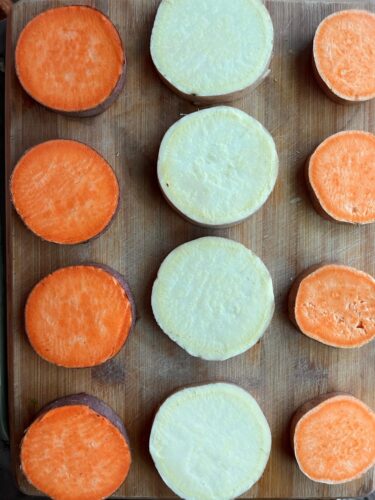
How Many Types of Sweet Potatoes Are There and What Do They Offer?
Sweet potatoes come in more varieties than most people realize, and each brings something slightly different to the table.
Beauregard — The most widely available variety in the US. Deep orange flesh, moderately sweet, and incredibly versatile. This is the one you will most often find at the grocery store and it works beautifully in every cooking method covered in this post.
Garnet — Sometimes called a yam at the supermarket, though true yams are a different vegetable entirely. Garnet sweet potatoes have a deep reddish-purple skin and bright orange flesh that turns exceptionally sweet and creamy when roasted.
Jewel — Similar to Garnet in appearance but with a slightly milder flavor. A reliable all-purpose sweet potato that holds its shape well in salads and soups.
Japanese Sweet Potato — Purple skin with pale, starchy white to yellow flesh. Less sweet than orange varieties and slightly drier in texture, making them ideal for roasting. Their flavor is often described as nutty and more complex than standard sweet potatoes.
Purple Sweet Potato — Deep purple flesh packed with anthocyanins, the same antioxidant compounds found in blueberries. Slightly less sweet and denser than orange varieties. Stunning in salads and roasted dishes.
Nutritional benefits across all varieties:
Sweet potatoes are one of the most nutrient dense root vegetables available. They are an exceptional source of beta-carotene (the compound the body converts to vitamin A) which supports immune function, eye health, and skin integrity. They are also rich in vitamin C, potassium, manganese, and B vitamins, and provide a meaningful amount of dietary fiber that supports digestive health and sustained energy. Orange-fleshed varieties are particularly high in antioxidants, while purple varieties offer the additional benefits of anthocyanins. Despite their natural sweetness, sweet potatoes have a moderate glycemic index when cooked properly, meaning they provide steady energy rather than a blood sugar spike.
Different Ways to Cook Sweet Potatoes
Sweet potatoes are genuinely forgiving, they respond well to almost every cooking method! The best way to cook sweet potatoes depends on what you are making and what texture and flavor profile you are after.
Roasting brings out the natural sugars through caramelization, producing a deeply sweet, slightly crispy exterior and tender interior. Best for side dishes, grain bowls, and anything where you want concentrated flavor.
Steaming preserves the most nutrients and produces a consistently moist, soft texture throughout. Best for meal prep, mashing, and any application where you want the sweet potato to remain light and delicate.
Boiling is the quickest method but results in the most nutrient loss to the cooking water. Best reserved for situations where speed matters and the sweet potato will be heavily seasoned or combined with other ingredients.
Soups and stews allow sweet potatoes to cook low and slow in liquid, absorbing surrounding flavors while their natural starchiness thickens and enriches the broth. Best for warming, one-pot meals where depth of flavor is the goal.
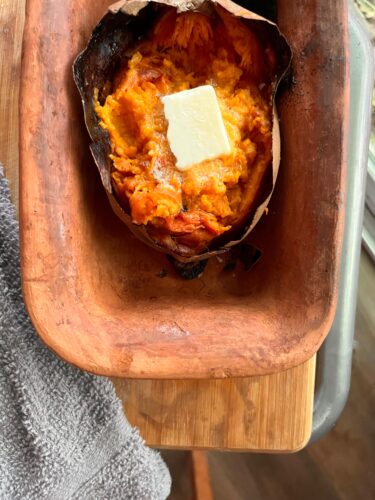
Roasted Sweet Potatoes in Clay Cookware
Roasting is one of the most popular ways to cook sweet potatoes, and for good reason! The dry, high heat of an oven drives off surface moisture and triggers caramelization simultaneously, converting the natural sugars in the flesh into complex, deeply sweet, slightly nutty flavors that no other cooking method can replicate.
The difference between roasting in a metal pan and roasting in a Miriam’s clay pan comes down to how heat is delivered. Metal conducts aggressive direct heat that can caramelize the bottom of the sweet potato quickly while the interior lags behind. Clay radiates far-infrared energy from all directions, cooking the sweet potato evenly from the outside in, which means a consistently tender interior and a beautifully caramelized exterior without burning the bottom.
For crispy roasted sweet potatoes: Cut into uniform cubes or wedges, toss with olive oil, salt, and your choice of seasoning, and spread in a single layer in the Miriam’s Large Pan or on Miriam’s Large Griddle. Roast at 375°F for 25 to 30 minutes, turning once halfway through. The clay surface pulls moisture away from the cut sides of the sweet potato as it roasts, producing a crisp exterior that rivals anything you would get from a metal sheet pan without any synthetic coating between your food and the heat.
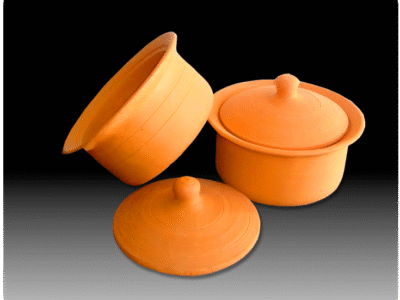
For tender whole roasted sweet potatoes: Pierce each sweet potato several times with a fork and place directly in Miriam’s Medium Pot or even a Medium Loaf Pan as pictured here. Roast at 375°F for 45 to 60 minutes depending on size, until a knife slides through the thickest part with no resistance. The clay retains heat so evenly that the sweet potato cooks through consistently, producing a soft, naturally sweet flesh that needs nothing more than a little butter and flaky salt.
Sweet Potato Soups and Stews in Clay Pots
If there is one cooking method that our clay pots are made for, it is soups and slow-cooked stews. The even heat distribution of pure clay means the liquid never reaches a harsh boil that toughens vegetables and drives off flavor. Instead it maintains a consistent gentle simmer that allows every ingredient to cook through at the same pace, developing flavor gradually and melding together in a way that fast, high-heat cooking simply cannot achieve.
Sweet potatoes are a perfect candidate for clay pot soups. Their natural starchiness thickens broth as they cook, their sweetness balances savory and spicy elements beautifully, and their texture holds up well to longer cooking times without completely breaking down.
Simple Sweet Potato Soup -serves 4
Ingredients:
- 3 medium sweet potatoes, peeled and cubed
- 1 small onion, diced
- 3 cloves garlic, minced
- 1 tbsp fresh ginger, grated
- 4 cups vegetable or chicken broth, or water
- Home made coconut milk (or store bought 1x can of full fat coconut milk – look for a glass jar options and with not additives or gum)
- 2 tbsp olive oil or ghee
- 1 tsp turmeric
- 1 tsp cumin
- Salt and pepper to taste
- Fresh lime juice and cilantro to finish
Instructions:
- Warm your MEC pot on low heat for a few minutes before increasing to medium. Add olive oil or ghee and sauté onion gently for 5 to 7 minutes until soft.
- Add garlic and ginger and cook for another minute until fragrant.
- Add sweet potato cubes, turmeric, and cumin. Stir to coat evenly in the oil and aromatics.
- Pour in broth or water, bring to a gentle simmer, cover, and cook for 20 to 25 minutes until the sweet potatoes are completely tender.
- Use an immersion blender to blend until smooth, or carefully transfer to a blender in batches.
- Stir in coconut milk and return to low heat for 5 minutes. Taste and adjust seasoning.
- Finish with a squeeze of fresh lime and fresh cilantro. Serve straight from the clay pot.
Using Cooked Sweet Potatoes in Salads
Cooked sweet potatoes, whether roasted or steamed, are one of the most versatile meal prep ingredients you can have on hand. They add natural sweetness, substance, and nutrition to salads that would otherwise feel incomplete, and they hold up beautifully when dressed and stored in the refrigerator for several days.
Roasted Sweet Potato and Black Bean Salad -serves 4
Ingredients:
- 2 medium sweet potatoes, cubed and roasted in a Miriam’s Pot or Pan
- 1 cup of cooked black beans (or 1 can of drained and rinsed black beans)
- 1 red bell pepper, diced
- ½ red onion, thinly sliced
- Handful of fresh arugula or mixed greens
- ¼ cup pumpkin seeds
For the dressing:
- 3 tbsp olive oil
- 2 tbsp lime juice
- 1 tsp cumin
- 1 tsp honey or maple syrup
- Salt and pepper to taste
Instructions:
- Roast sweet potatoes in your Miriam’s Pot or Pan at 375°F until caramelized and tender. Allow to cool slightly.
- Combine roasted sweet potatoes, black beans, red pepper, and red onion in a large bowl.
- Whisk dressing ingredients together and pour over the salad. Toss gently to combine.
- Serve over arugula or greens, topped with pumpkin seeds
This salad works warm, at room temperature, or cold from the refrigerator, making it an ideal meal prep option for the week.
Why Use Non-Toxic Clay Cookware for Sweet Potatoes
Sweet potatoes are a health food. They are chosen specifically for their nutritional density, their natural sweetness, and the clean energy they provide. Cooking them in a pan coated with synthetic materials, materials that interact with food under heat, degrade over time, and introduce compounds into the meal that no one asked for, works against the entire point of choosing them in the first place.
Miriam’s pure clay cookware is the only cookware that brings nothing to the meal except better cooking. Here is why it matters specifically for sweet potatoes:
Gentle, nutrient friendly, even heat distribution: Clay radiates far-infrared energy that penetrates food from all directions rather than conducting aggressive heat from a single surface. For sweet potatoes, this means even cooking throughout. No burnt bottoms, no raw centers, and most of all no damage to the delicate vitamins and rich minerals in the food.
Moisture retention and tenderness: The naturally semi-porous clay walls and tight-fitting lid create a self-basting cooking environment that keeps sweet potatoes moist during longer cooking. Steamed and slow-cooked sweet potatoes come out consistently silky and tender rather than dried out at the edges.
Natural and chemical-free cooking: Miriam’s cookware is made from 100% primary clay with no glazes, no coatings, no additives, and no heavy metals. Tested and certified free of lead and cadmium. What touches your sweet potatoes is nothing but pure unaltered earth, the same material that has been used for clean cooking for thousands of years.
Better flavor: When food cooks in a chemically inert environment with consistent, gentle heat, the natural flavors have room to develop fully. The caramelization of roasted sweet potatoes is deeper, the sweetness of steamed ones is more pronounced, and the complexity of clay pot soups is richer than anything a metal pot produces.
The Right Cookware Makes Every Sweet Potato Recipe Better
Sweet potatoes are one of the most rewarding vegetables to cook. They’re naturally sweet, endlessly versatile, and packed with nutrition that makes every meal feel like a genuinely good choice. Whether you are learning how to cook sweet potatoes for the first time or looking for new ways to bring them to the table, the recipes in this post cover the full range of what they can do, from a simply roasted weeknight side to a warming coconut soup and a meal-prep salad worth looking forward to.
What ties all of them together is the cookware. our !00% pure clay pots not just hold the food, it actively improves it. Clay cooks gently and evenly, retaining moisture and flavor, while bringing nothing unwanted to the meal. Miriam’s Earthen Cookware is the starting point for every recipe here, and the difference it makes is one you will notice from the very first bite.


0 Comments
Write a Comment